
Gaffer vs. DP: Who Does What on Set?
Lighting is at the heart of cinematography, but two key roles shape how it all comes together: the Director of Photography (DP) and the Gaffer. Both positions are essential, yet they serve very different purposes. The DP designs the visual approach, while the Gaffer ensures that design is executed safely and effectively. Understanding the difference between the two isn’t just technical—it’s what keeps a production efficient, organized, and visually consistent from start to finish.
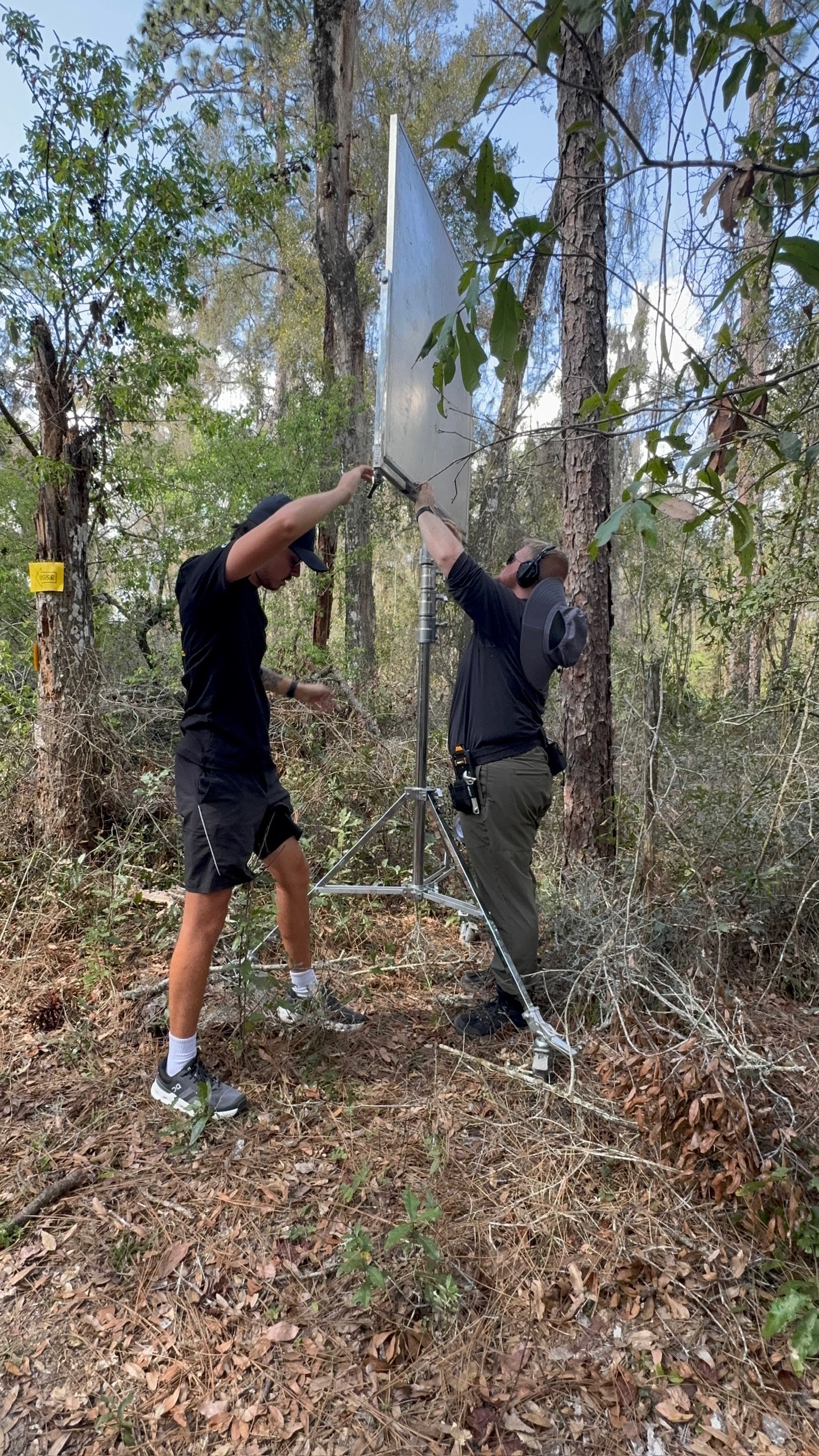
The DP: Painting the Big Picture
The Director of Photography is responsible for translating the director’s vision into moving images. My role as DP is to create the visual language of the film, which includes:
Choosing camera angles, lenses, and movement that support the story.
Designing a lighting strategy that sets the right mood and atmosphere.
Balancing realism with stylization, depending on the project’s needs.
Ensuring every shot cuts seamlessly together for the editor.
At its core, the DP’s job is creative: shaping the look, feel, and storytelling power of the image. But even the best design is only as strong as the crew who makes it possible.
The Gaffer: Making the Plan Work
Once a DP develops the lighting design, the Gaffer brings it to life. Also known as the Chief Lighting Technician, the Gaffer leads the electrical crew and handles the practical side of lighting. That includes:
Overseeing the electrical team (best boy, juicers, rigging electricians).
Managing lights, stands, cables, and power distribution.
Troubleshooting challenges when locations create limitations.
Executing and fine-tuning the setup so the DP’s vision is accurately realized.
As Harry C. Box notes in The Set Lighting Technician’s Handbook, the Gaffer is a problem-solver and a master of logistics. They may not shape the creative intent, but without their technical expertise, the design couldn’t exist on screen.
Why Clear Roles Matter
When the boundaries between DP and Gaffer are respected, productions run smoothly:
Directors and producers communicate with the DP about creative vision.
Electricians and grips take their marching orders from the Gaffer.
Every department stays organized and safe, knowing exactly who to turn to.
This structure ensures that artistry and technical execution complement each other, without confusion or delay on set.
How I Work
In Central Florida, I’m hired either as a DP or as a Gaffer depending on the project. I don’t combine the two roles on the same set.
As DP, I focus on the creative translation of story to screen, with a strong emphasis on lighting design as a storytelling tool.
As Gaffer, I focus on the technical execution of that design, ensuring complex setups are handled safely, efficiently, and with precision.
In either role, I can also provide gear rental to support the production from start to finish.
If you’re looking for a DP who brings a deep understanding of lighting to cinematography—or a Gaffer who can execute challenging setups with confidence—I’d love to collaborate.
📩 Reach me at tyler@tylerwilliamsdp.com
📍 Based in Central Florida | Available to travel
References
Box, Harry C. Set Lighting Technician’s Handbook: Film Lighting Equipment, Practice, and Electrical Distribution. 5th ed. New York: Routledge, 2020.
Looking for a Florida DP or Gaffer? Tyler Williams is available for productions across Tampa, Orlando, and Miami. View services: tylerwilliamsdp.com/services